All Regarding Metal Casting: Exactly How Foundries Supply Quality and Precision in Production
Metal casting stands as a fundamental procedure in manufacturing, where raw metals are changed right into particular components. Foundries utilize numerous casting approaches to achieve preferred characteristics and shapes. Each technique comes with its own collection of limitations and benefits. Comprehending these nuances is crucial for valuing how high quality and precision are preserved throughout the process. The conversation in advance will certainly check out the complex characteristics of metal casting and its significance throughout several industries.
The Fundamentals of Metal Casting
Metal casting is an essential procedure in making that includes forming molten metal into wanted forms. This necessary technique starts with the choice of raw materials, commonly different metal alloys, which are melted in a heater. When the metal gets to the appropriate temperature, it comes to be fluid and ready for casting.
The process calls for a mold and mildew, generally made from sand, metal, or ceramic, which defines the final form of the cast things. Once the liquified metal is put into the mold and mildew, it cools and strengthens, taking on the mold and mildew's shapes.
After cooling down, the casting is eliminated from the mold, and any type of needed finishing procedures, such as trimming or brightening, are performed. This method permits producers to create intricate forms and components with high precision and marginal waste. Metal casting is extensively made use of throughout numerous markets, from auto to aerospace, highlighting its importance in contemporary manufacturing.
Kinds of Casting Approaches
While different casting approaches exist, each technique offers unique benefits and is matched for different applications. Sand casting, among one of the most common approaches, utilizes sand as the mold product, permitting for intricate layouts and large components. Investment casting, recognized for its precision, employs a wax pattern coated in ceramic, making it perfect for intricate geometries. Die casting, which includes compeling molten metal right into molds under high pressure, is frequently made use of for mass production of small, in-depth elements. In addition, shell molding incorporates sand and resin to develop thinner, more exact mold and mildews, boosting surface area finish. One more method, continuous casting, enables the manufacturing of long lengths of metal forms, enhancing manufacturing processes. Each of these techniques plays a pivotal duty in the metal casting industry, attending to particular needs from production quantity to make complexity, consequently adding to the variety of applications across numerous industries.
The Duty of Foundries in Manufacturing
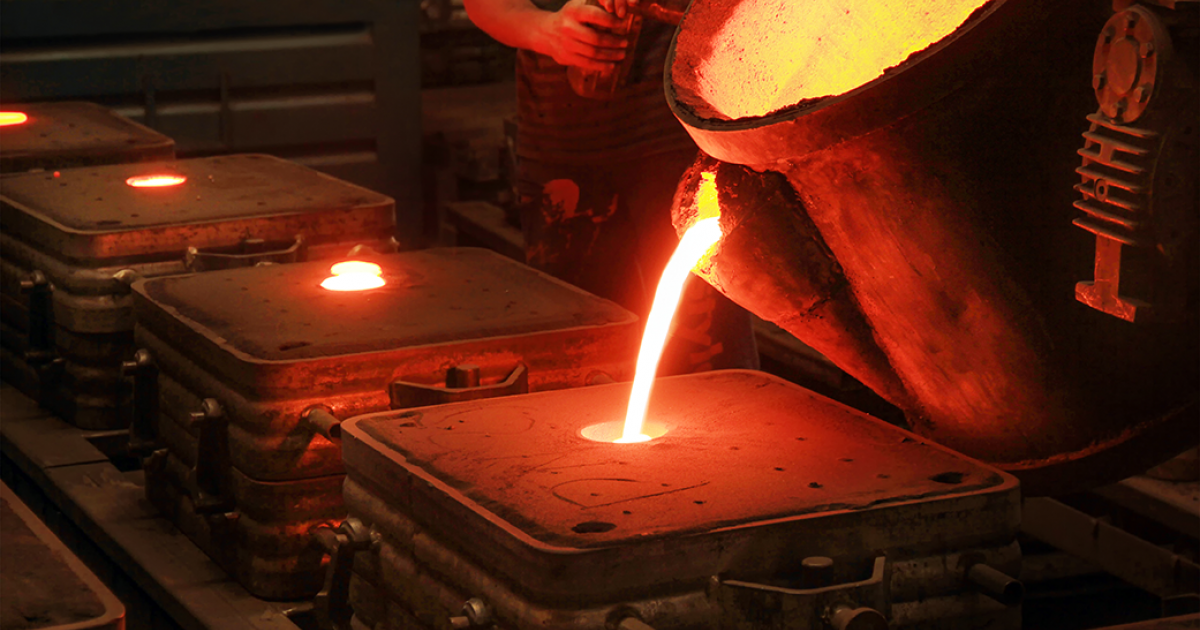
Foundries serve a vital function in the production landscape, as they change raw steels right into usable elements via numerous casting processes. These facilities utilize a range of strategies to produce items that meet exact requirements, consequently making sure top quality and effectiveness in manufacturing (Aluminum Casting). By using approaches such as sand casting, financial investment casting, and die casting, foundries deal with diverse sectors, including vehicle, aerospace, and building
Eventually, shops are essential to the production environment, providing vital parts that support a large variety of markets and applications. Their precision and versatility drive performance in contemporary production.
Materials Used in Metal Casting
The selection of products utilized in metal casting is crucial for accomplishing the desired residential or commercial properties and performance of the end product. Numerous steels such as aluminum, bronze, and iron are typically used, each offering distinct benefits. Aluminum is favored for its lightweight and corrosion-resistant qualities, making it suitable for automotive and aerospace applications. Iron, particularly cast iron, is recognized for its outstanding fluidness and strength, ideal for heavy machinery and facilities elements. Bronze, with its remarkable wear resistance, is often utilized in aquatic atmospheres.
Additionally, materials such as silica sand are often used for mold and mildew making, giving a great equilibrium between toughness and convenience of shaping. The selection of products likewise includes ingredients like fluxes, which enhance the casting procedure by enhancing fluidness and minimizing oxidation. Inevitably, the appropriate option of these products substantially influences the effectiveness and top quality of the casting process.
High quality Control in the Casting Refine
Quality assurance in the casting process is important to guarantee that last products satisfy industry standards and specs. Numerous evaluation methods are employed to recognize problems and analyze the integrity of actors components. Furthermore, adherence to established standards and certifications enhances the reliability and efficiency you can try here of cast materials.
Examination Techniques Employed
Keeping the stability of cast metal elements depends greatly on various inspection techniques. Foundries employ aesthetic inspections as an initial step to recognize surface problems, such as incorporations or cracks. Non-destructive testing (NDT) methods, including ultrasonic testing and radiographic inspection, are vital for detecting interior problems without jeopardizing the part's stability. Dimensional examinations utilizing calipers and coordinate measuring equipments verify that components meet specified resistances. In addition, chemical analysis confirms that the alloy composition straightens with needed requirements. These evaluation techniques collectively confirm that the castings fulfill the essential high quality and performance criteria, ultimately reducing the risk of failure in their designated applications. Executing these rigorous evaluations is essential for keeping high requirements in metal casting manufacturing.
Requirements and Certifications
Criteria and qualifications play a crucial function in the quality assurance of the casting procedure. Foundries abide by various worldwide and industry-specific criteria, such as ISO 9001 and ASTM guidelines, assuring consistency and dependability in their items. These requirements lay out the essential requirements for products, manufacturing techniques, and screening procedures, adding to a much more efficient production procedure. Accreditations, such as AS9100 for aerospace applications, further highlight the value of quality guarantee in specialized industries. By obtaining these qualifications, shops show their dedication to excellence, improving and lowering problems consumer complete satisfaction. Regular audits and examinations verify compliance, promoting continual enhancement and innovation within the industry. Ultimately, adherence to developed standards grows trust fund between suppliers and clients.
Developments in Casting Modern Technology
3D Printing Assimilation
Incorporating 3D printing innovation into metal casting processes is changing the production landscape. This cutting-edge blend boosts the layout and production of intricate geometries that typical approaches battle to achieve. By employing additive manufacturing for creating molds and cores, foundries can greatly minimize preparations and material waste. In addition, 3D printing permits for fast prototyping, allowing producers to check layouts promptly and successfully, therefore facilitating iterative improvements. This modern technology additionally sustains the production of lightweight components, which are necessary in industries like aerospace and automobile. Consequently, the integration of 3D printing not only streamlines operations however also raises the precision and quality of actors metal items, marking a noteworthy advancement in the market.
Automated Production Processes
The advancements in 3D printing have led the way for further advancements in automated production procedures within metal casting. Foundries are progressively adopting robotics and automation to improve efficiency and precision. Automated systems simplify the whole casting process, from mold and mildew creation to completing and pouring. Smart sensing units and real-time tracking enable accurate control of temperature levels and material flow, minimizing waste and enhancing quality. In addition, software application services facilitate far better layout and simulation, making it possible for suppliers to enhance processes prior to production starts. These computerized production processes not just reduce labor costs yet likewise decrease human mistake, making certain consistent result. As a result, the integration of innovative technologies in metal casting is transforming production capacities and meeting the expanding needs of numerous industries.
Advanced Material Growth
As markets require greater efficiency and sustainability, innovations in product advancement for metal casting are becoming a critical focus. Engineers and scientists are checking out new alloys and compounds that boost mechanical buildings while minimizing ecological effect. Advancements consist of light-weight products that maintain strength, enabling much better fuel effectiveness in transportation applications. In addition, the incorporation of recycled products is ending up being much more common, aligning with sustainability objectives. Advanced casting methods, such as 3D printing and precision molding, enable for the production of complicated geometries that conventional approaches can not achieve. These advancements not only boost the capability of cast components however additionally boost production efficiency. Overall, the continual advancement of material scientific research drives the future of metal casting, fulfilling the you could try these out demands of contemporary markets.
Applications of Metal Casting Across Industries
Metal casting plays an important role in different sectors, as it permits the manufacturing of complex shapes and top quality parts with relative performance - Aluminum Foundry. In the automotive field, cast metals are crucial for developing engine blocks, transmission instances, and various other vital parts that require toughness and precision. Aerospace sectors utilize metal casting for parts like generator blades and structural elements, where integrity is vital
Furthermore, machinery and equipment production more information advantage from metal casting by creating equipments, real estates, and other intricate parts that improve performance. The building sector likewise uses metal casting for architectural features, architectural supports, and fittings, showcasing versatility.
The clinical field relies on cast steels for medical tools and implants, emphasizing the demand for biocompatibility. Generally, metal casting is a foundational process throughout several sectors, supplying services that fulfill rigorous top quality requirements and performance demands.
Often Asked Questions
What Safety Actions Are Absorbed Metal Casting Foundries?
In metal casting factories, security measures include protective equipment, air flow systems, routine devices upkeep, staff member training, and emergency procedures to mitigate threats linked with high temperatures, dangerous materials, and prospective mishaps throughout the casting procedure.
Exactly How Do Foundries Manage Waste and Environmental Impact?
Foundries take care of waste and environmental impact through reusing materials, applying filtering systems for emissions, and adhering to policies - Metal Casting. They also adopt sustainable techniques, such as minimizing energy intake and making use of environment-friendly substances in their processes
What Are the Expenses Connected With Metal Casting Procedures?
The expenses linked with metal casting processes consist of resources, labor, tools upkeep, energy intake, and waste monitoring. In addition, variations in market value and compliance with environmental policies can significantly impact total expenditures for factories.
Exactly How Does Metal Casting Compare to Various Other Production Techniques?
Metal casting offers unique benefits, such as intricate forms and high product performance, contrasted to techniques like machining or marking. It might involve much longer lead times and greater preliminary prices, depending on project requirements.
What Occupation Opportunities Exist in the Metal Casting Sector?
The metal casting industry provides numerous profession chances, consisting of factory monitoring, procedure design, quality control, mold and mildew style, and device operation. Professionals can likewise seek roles in study and advancement, sales, and environmental health and wellness.
Metal casting stands as a fundamental procedure in production, where raw steels are changed into certain elements. Metal casting is a fundamental process in producing that entails forming liquified metal into desired kinds. Another approach, constant casting, allows the production of long lengths of metal forms, improving manufacturing processes. The costs linked with metal casting procedures include raw products, labor, tools upkeep, energy usage, and waste administration. The metal casting sector supplies different profession chances, including factory monitoring, process engineering, top quality assurance, mold style, and equipment operation.
Comments on “How Modern Metal Casting Foundries Are Integrating 3D Printing for Innovation”